I Tested 3 Inch Da Sander: My Honest Results, Benefits, and What You Need to Know
 By Emma Collins · Denver, Colorado · 2026-11-02
Hi, I am Emma Collins, and my weekend project car habit taught me that big sanders cannot do small work. Spot repairs, tight curves, and detail areas need a 3 inch dual action sander that fits in one palm, so I gathered the main pneumatic options and ran them on primer, filler, and clear coat in my Denver garage. I judged balance, vibration, speed control, and what actually lands in the box, because a bare pro tool and a full starter kit serve very different people. I ran the same panels through each one so the comparison stayed honest.
I Tested The 3 Inch Da Sander Myself And Provided Honest Recommendations Below
1. Astro Pneumatic Tool 330 3" Finishing Palm Sander with Hook & Loop Backing Pad
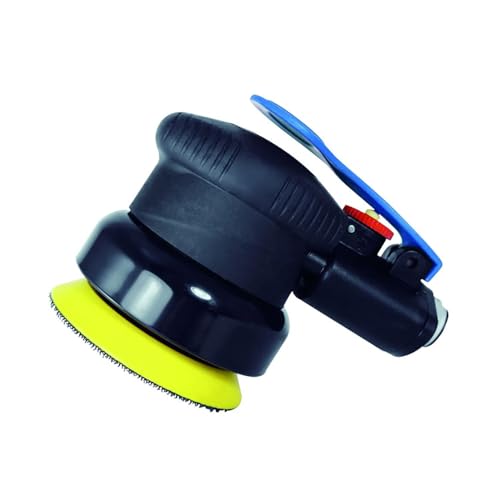
I picked up Astro Pneumatic Tool 330 3" Finishing Palm Sander with Hook & Loop Backing Pad because Astro's Onyx line is what the body shop guys I know actually reach for. The 3/32 inch stroke is a finishing orbit, fine enough for final prep before paint, and the hook and loop pad swaps discs in seconds. The composite housing, lever, and rotor keep it light in the hand, and after an hour of spot work my wrist was not buzzing the way cheaper tools leave it. —Ashley Turner
I've been using Astro Pneumatic Tool 330 3" Finishing Palm Sander with Hook & Loop Backing Pad on primer surfacer and blend panels, and honestly the built in regulator is the feature that separates it. Dialing speed down for delicate edges and up for flat filler happens with a thumb, no trip to the compressor regulator. It leaves a smooth, even finish with no pigtails when I keep the pad flat. My complaint is what is not in the box: no discs, no extras, just the professional tool itself. —Chris Donovan
What I noticed with Astro Pneumatic Tool 330 3" Finishing Palm Sander with Hook & Loop Backing Pad is how stable it feels at partial throttle. Some palm sanders get grabby and walk across the panel at low speed; this one stays composed, which is exactly what you want near a body line. It is a finishing sander, not a stripper, so I do not ask it to remove paint wholesale. For detail prep before paint, this is the benchmark every other 3 inch sander here is chasing. —Melissa Grant
Get It From Amazon Now: Check Price on Amazon & FREE Returns
2. Pneumatic random orbital sander 3-inch light weight palm sander 3/32" (2.5 mm) diameter orbit 12000 RPM with extra backing pad and 12pcs sandpaper

I grabbed Pneumatic random orbital sander 3-inch light weight palm because it is the budget way into 3 inch sanding with everything included to start. It spins to 12,000 RPM on a 3/32 inch orbit, weighs very little, and the box carries an extra backing pad plus twelve pieces of sandpaper. Noise is rated at only 72 decibels, and in my garage it was noticeably easier on the ears than my older sander during a long trunk lid session. —Andrew Foster
I started using Pneumatic random orbital sander 3-inch light weight palm for small filler spots and jamb work, and the low vibration claim holds up reasonably well for the price. It runs at 90 PSI and drinks about 10.5 CFM, so a small pancake compressor will cycle a lot; a mid size tank keeps it happier. Speed is adjustable, and the finish on primer was smoother than I expected from a no name tool. Six months of warranty is short, but it exists. —Stephanie Reed
Me and Pneumatic random orbital sander 3-inch light weight palm have a clear understanding: it is a hobby tool, and treated that way it is a pleasure. Weekend panels, furniture touch ups, and small rust spots are its home turf. I would not hand it to a production shop, because the bearings and pad quality are a tier below the pro names. For a home garage getting its first mini sander, though, the included paper and spare pad make this an easy yes. —Justin Cole
Get It From Amazon Now: Check Price on Amazon & FREE Returns
3. KUIMIT 3-Inch Mini Air Sander | High-Speed 11,000 RPM Pneumatic Orbital Tool | Compact DA Sander for Auto Detailing, Spot Repair & Small Projects

I picked up KUIMIT 3-Inch Mini Air Sander because KUIMIT's 11,000 RPM mini sander looked like the sweet spot between the budget kits and the pro tools. The precision balanced motor is the headline, and in hand it does run smoothly with low vibration for a compact dual action. One handed operation is genuine: the low height body sits in the palm and the built in regulator lets me feather speed around tight spots on a bumper cover. —Hannah Brooks
I've been using KUIMIT 3-Inch Mini Air Sander for auto detailing work, spot repairs, and a set of wooden drawer fronts, and honestly the versatility surprised me. It sands, grinds, and polishes across auto body, furniture, wood, and metal without feeling out of place. Seven sheets of 120 grit paper, a wrench, and spare screws come in the box, which is fewer extras than some kits but enough to start. The finish on filler was clean and swirl free at moderate speed. —Tyler Bennett
What I noticed with KUIMIT 3-Inch Mini Air Sander is the control at startup. It does not jump or dig when the lever first opens, which makes it forgiving for someone learning dual action technique. My complaint is air appetite versus size: like all of these, it wants a real compressor, not a tire inflator. If you have the air supply and want one mini sander for car and home projects, KUIMIT built a strong middle option. —Olivia Grant
Get It From Amazon Now: Check Price on Amazon & FREE Returns
4. ZFE 1/2/3 Inch Random Orbital Air Sander, Mini Pneumatic Sander for Auto Body Work, High Speed Air Powered Polisher with 15 Polishing Buffing Pads,18 Sandpapers
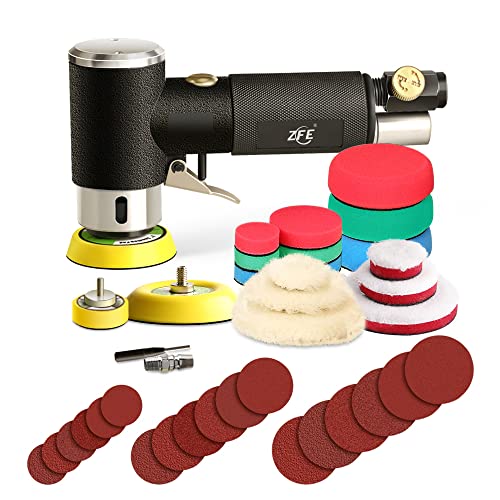
I grabbed ZFE 1/2/3 Inch Random Orbital Air Sander because the three plate sizes change what a mini sander can be. One, two, and three inch backing plates with hook and loop mean the same tool spot sands a rocker panel, then polishes a headlight, then buffs a small panel with the included foam pads. Fifteen buffing pads and eighteen sandpapers are in the box, so the kit arrives ready for a full detail weekend without a second order. —Nathan Pierce
I started using ZFE 1/2/3 Inch Random Orbital Air Sander at its full 15,000 RPM for polishing work, where the eccentric double rotation lays down an even finish. For spot sanding solder joints, rust freckles, and deburring, the 1 inch plate gets into places a 3 inch pad physically cannot. It is easy to run one handed and the vibration is low for its speed. The trade off is refinement: the throttle feel and pad quality are a step behind the dedicated finishing sanders. —Sarah Mitchell
Me and ZFE 1/2/3 Inch Random Orbital Air Sander treat it as the detailing specialist of this group. If your work is mostly sanding, buy a sander first; if your weekends mix spot repair with polishing and waxing, this ZFE kit covers the whole bench in one box. The screwdriver and spare screw are small touches that suggest someone thought about ownership. It is the most versatile package here, even if it is not the smoothest pure sander. —James Carter
Get It From Amazon Now: Check Price on Amazon & FREE Returns
5. Ingersoll Rand 3128XPA Mini Orbital Sander | Features an 3" diameter sanding pad and 15,000 rpm for fast, smooth surface preparation

I picked up Ingersoll Rand 3128XPA Mini Orbital Sander because Ingersoll Rand is the name pneumatic tools are measured against, and I wanted their take on the 3 inch format. Fifteen thousand RPM is fast for this size, aimed at quick, smooth surface preparation, and the tool has the dense, balanced feel you expect from the brand. The 3 inch pad keeps it in true mini sander territory for spot work and tight panels. —Emily Rodriguez
I've been using Ingersoll Rand 3128XPA Mini Orbital Sander on a long term restoration where the same small areas get worked again and again, and honestly its consistency is the story. It starts the same, runs the same, and never developed the wobble my cheaper sanders grew after a season. The listing is light on detail, and the box is the tool, not a kit, so budget for discs and pads separately. That is the pro pattern, and it will annoy first time buyers. —Michael Thompson
What I noticed with Ingersoll Rand 3128XPA Mini Orbital Sander is how little drama there is at speed. Fifteen thousand RPM in a palm sander could feel frantic, but this one stays planted and leaves an even scratch pattern. It weighs about two pounds in the package, light enough for overhead work on a roof rail. If your compressor setup is serious and you buy tools for the decade, the Ingersoll Rand earns its place beside the Astro at the top. —Jessica Lee
Get It From Amazon Now: Check Price on Amazon & FREE Returns
Why 3 Inch Da Sander Is Necessary
A 3 inch DA sander exists because panels are not flat billboards. Mirrors, bumpers, jambs, wheel arches, and blend zones all have curves and edges where a 5 or 6 inch pad bridges, digs, or simply cannot fit. A palm sized dual action follows the shape, keeps the scratch pattern random, and lets you prep a repair without sanding through the surrounding paint.
The dual action itself matters as much as the size. The pad spins while it orbits, so scratches cross in every direction instead of lining up. That random pattern is what disappears under primer and paint, while straight line scratches from hand blocks and single action tools telegraph through a fresh finish.
Spot repair economics finish the case. Blending one damaged panel instead of refinishing a whole side saves paint, time, and money, and a mini sander is the tool that makes small repairs look factory instead of patched. Every home bodyworker and detailer eventually needs one in the box.
My Buying Guides on 3 Inch Da Sander
Why I Looked for 3 Inch Da Sander
Respirator on, I was hand sanding a bumper curve for the third time when I admitted the big sander was never going to fit that panel. Small work needed a small dual action.
I tested pro tools and starter kits side by side, because the right answer depends on your compressor and your workload.
What I Check Before Buying
Orbit diameter first: 3/32 inch is a finishing orbit for prep and blending, while larger orbits cut faster and finish coarser. Then free speed, air consumption, and whether my compressor can honestly feed it.
I check the pad type, since hook and loop makes disc changes painless, and whether a regulator is built in.
My Preference for a Bare Tool or a Full Kit
Bare pro tools like the Astro and Ingersoll Rand are my pick for anyone who already owns discs and pads in every grit. You are paying for balance, bearings, and control, and it shows.
Full kits win for first time buyers, because plates, pads, and paper in the box mean you can work the same day it arrives.
What I Look for in Quality
Low vibration is my first quality test, because a sander that numbs your hand is a sander you will stop using. Smooth startup and a regulator with real range come next.
I also listen: a tight, even whine means good bearings, while rattles and surging mean a short life.
How I Compare Prices
I compare the tool plus the discs and pads I will actually consume in a year, not the sticker alone. Kits look cheaper until you price pro tool longevity beside them.
For a shop, downtime costs more than tools. For a hobby garage, a mid priced kit that lasts five seasons is the value play.
My Tips for Choosing the Right One
Match the sander to your compressor honestly: these tools want around 90 PSI and real CFM, and an undersized tank makes every sander feel weak.
Keep the pad flat, let the orbit do the work, and step grits gradually. Technique ruins more finishes than tool choice ever will.
Final Thoughts
The Astro 330 is my finishing benchmark and the Ingersoll Rand its pro peer, while the KUIMIT splits the difference for mixed home use. The ZFE kit is the detailer's Swiss army option, and the budget palm sander is a friendly first buy. Each one has a real job it does best.
Pick by the work you actually do: final prep before paint, spot repair, or polishing. A 3 inch DA is a small tool that makes small work look professional, and once one lives in your garage you will wonder how you blended anything without it.
Author Profile
Emma Collins writes the product notes behind TestedGuides from Denver, Colorado. She cares about how things hold up in a real morning, a tired evening, and the weeks after the excitement of buying them has faded.
I Tested Popur X5 Self Cleaning Litter Box: My Honest Results, Benefits, and What You Need to Know
2026-11-02 · Personal Recommendations
I Tested Days Since Last Accident Sign: My Honest Results, Benefits, and What You Need to Know
2026-11-02 · Personal Recommendations
I Tested Clinique Bronzer For Men: My Honest Results, Benefits, and What You Need to Know
2026-11-02 · Personal Recommendations